Complete Guide to Landscape Contractor Insurance
The non-negotiable coverages that protect commercial and residential landscaping businesses from property damage, injuries, and equipment theft.
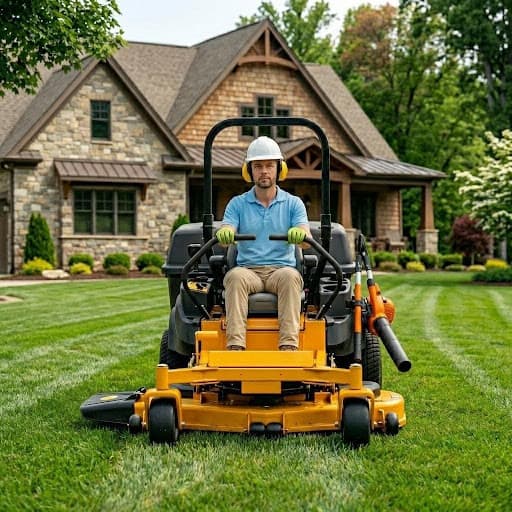
As a landscaping professional, your days are spent transforming outdoor spaces, operating heavy machinery, and managing crew members.
Whether you are doing a simple mowing job, laying down high-end landscaping or handling a commercial job, you deal with unique risks every single time you step on a job site. A single misplaced excavator bucket or an accidental cut through an underground utility line can result in thousands of dollars in damages.
That is why having the right landscape contractor insurance is not just a smart business move — it is a foundational necessity to shield your business from devastating financial loss.
For business owners handling corporate accounts, securing robust commercial landscaping insurance ensures you meet strict property management requirements while keeping your assets safe.
This comprehensive guide breaks down everything you need to know about protecting your landscaping business, what coverages are non-negotiable, how much you can expect to pay, and how to get covered fast.
What is Landscape Contractor Insurance and Why Do You Need It?
Landscaping and lawn care companies operate in a highly dynamic environment. You aren't just sitting in an office. Your team is constantly on the move, transporting heavy equipment, navigating buried utilities and applying chemical treatments like fertilizers and pesticides.
Without adequate landscape contractor insurance, you're personally liable for any accidents that occur on the job. A single lawsuit or a stolen trailer of commercial mowers can completely wipe out your savings.
Investing in the right protection allows you to:
- Bid on larger, more lucrative jobs.
- Hire employees with total confidence.
- Secure commercial landscaping contracts that require proof of coverage before you can set foot on the property.
Core Coverage Types Included in Landscaping Insurance
A proper commercial policy isn't just a single piece of paper; it is a combination of different coverage types tailored to match your specific daily operations. Here are the core pillars that make up an effective landscape contractor insurance package.
Workers' Compensation Insurance
Landscaping is physically demanding and hazardous work. From heat exhaustion and heavy lifting to severe cuts from power tools, employee injuries happen.
Workers' compensation insurance covers medical treatment, rehabilitation costs, and lost wages for employees who get hurt or sick on the job. In most states, carrying workers' comp is legally required the moment you hire your very first employee.
New York State Disability Insurance (DBL)
If your primary service area is in New York, you face additional strict state-level mandates. New York law requires virtually all commercial employers to carry short-term disability benefits insurance (often referred to as DBL).
Unlike Workers' Comp — which handles injuries that happen on the job site — NYS Disability Insurance provides partial wage replacement for employees who suffer an illness or injury outside of work. Whether a crew member breaks an ankle over the weekend or requires surgery for a non-work-related medical issue, carrying a compliant DBL policy keeps your business legally covered and protects your workforce.
General Liability Insurance for Landscapers
This is the absolute bedrock of your business protection. General liability insurance covers third-party bodily injury, property damage, and personal advertising injury.
- Property Damage Scenario: While operating a commercial zero-turn mower, a crew member accidentally kicks up a loose rock, launching it through a client's expensive floor-to-ceiling glass window.
- Bodily Injury Scenario: You leave a trench open while installing an irrigation system, and a homeowner trips over it after dark, breaking their ankle.
General liability steps in to pay for the medical bills, repair costs, and legal defense fees if the client decides to take you to court.
The Business Owner's Policy (BOP): A Smarter Way to Bundle
For small-to-medium landscaping business owners looking to maximize their budget, purchasing policies individually isn't always the most cost-effective route. That is where a Business Owner's Policy (BOP) comes into play. A BOP essentially packages General Liability and Commercial Property Insurance together into one convenient, discounted bundle.
Choosing a BOP allows landscaping contractors to secure broad, foundational protection for both their third-party liabilities and their physical office or shop space, while keeping monthly premium costs significantly lower than buying the coverages separately.
Commercial Auto Insurance
Your work trucks, dump trucks, and utility trailers are the lifeblood of your business. Standard personal auto insurance policies typically exclude accidents that happen while conducting business activities.
If you or an employee gets into a collision while towing a trailer packed with mulch and machinery, you need commercial auto insurance to cover vehicle damage, medical expenses, and liability for injuries caused to other drivers.
Inland Marine Insurance (Tools and Equipment Coverage)
While commercial auto covers the truck and trailer in transit, it does not cover the tools inside or on the trailer. That is where Inland Marine insurance comes in.
This policy protects your movable assets — such as mowers, trimmers, leaf blowers, chainsaws, and skid steers — whether they are parked at your shop, sitting in transit, or left at a job site. If a thief breaks into your trailer overnight, this policy keeps you from paying out-of-pocket to replace your gear.
Commercial Property Insurance
While Inland Marine covers your tools while they are moving on the road or sitting at a job site, it doesn't cover your permanent base of operations. If you own or lease a physical office, a commercial warehouse, or a dedicated storage shed where you lock up your trucks and bulk inventory overnight, you need commercial property insurance.
This policy steps in if a fire, severe storm, or act of vandalism damages your building or the physical assets stored inside it — such as backup parts, office computers, furniture, and inventory like seed or fertilizer.
Commercial Landscaping Insurance vs. Residential Coverage
As your business scales, your risk scales with it. Transitioning into commercial contracts requires an upgrade in your coverage mindset.
| Feature | Residential Focus | Commercial Focus |
|---|---|---|
| Job Site Size | Smaller properties & yards | Large retail plazas, office parks, HOAs |
| Risk Exposure | Low to moderate public traffic | High-traffic public walkways and zones |
| Liability Limits | Typically $300k to $1 Million | High limits required ($2M to $5M+) |
| Equipment Used | Standard walk-behind & ride mowers | Heavy machinery, excavators, snow plows |
If you are pursuing corporate clients, municipal contracts, or homeowners' associations (HOAs), they will frequently demand highly specific commercial landscaping insurance endorsements.
These clients often require a minimum of $2 million or $5 million in general liability limits. Additionally, they will almost always request to be named as an Additional Insured on your certificate of insurance (COI). This ensures that if someone sues the property owner because of a mistake your crew made, your policy steps in to defend them.
How Much Does Landscape Contractor Insurance Cost?
The cost of your policy depends on several unique variables. No two landscaping businesses are exactly alike, and insurance companies calculate premium costs based on your specific level of risk exposure.
Key Factors That Influence Your Premium
- Business Size and Revenue: Higher revenue and larger payroll footprints mean you have more exposure to risk, which slightly increases your premium costs.
- Services Offered: Basic lawn mowing and hedge trimming carry lower risks than high-end landscape architecture, structural hardscaping, tree removal, or excavation work.
- Location: Operating in highly populated urban areas or regions with high litigation rates can lead to slightly higher rates than rural areas.
- Claims History: A clean record with zero past insurance claims proves to underwriters that you run a safe, structured operation, earning you the lowest possible rates.
Average Cost Ranges for Landscaping Businesses
To give you a clear baseline, here is a breakdown of what typical small-to-medium landscaping contractors pay for their essential coverage.
| Coverage Type | Estimated Average Monthly Cost | Primary Focus |
|---|---|---|
| General Liability | $45 – $90 | Third-party injuries & property damage |
| Commercial Property | $35 – $70 | Covers your physical shop, warehouse, or home-base office |
| Business Owner's Policy (BOP) | $80 – $130 | A cost-effective bundle of General Liability + Commercial Property |
| Commercial Auto | $120 – $250 | Work trucks, vans, and utility trailers |
| Inland Marine (Tools) | $15 – $40 | Theft or damage to mowers, trimmers, and gear in transit |
| Workers' Compensation | $1,500 – $3,500 (Annual per eligible worker) | Employee injuries and job-related illnesses |
Common Claims Examples: When Your Policy Kicks In
Understanding insurance theory is fine, but seeing how it works in real life helps clarify why these coverages matter. Here are three common scenarios that landscaping professionals face every season.
Case 1: The Buried Utility Disaster
Your crew is digging out a flower bed to install a retaining wall. Despite checking utility markings, the excavator strikes an underground fiber-optic data cable servicing a local business park.
The resulting internet outage forces multiple companies offline for a full day, leading to massive claims for business interruption and expensive utility repair bills. Your landscape contractor insurance general liability policy steps in to cover the utility repair costs and the legal settlements from the affected businesses.
Case 2: The Midnight Trailer Heist
You lock up your secure utility trailer at a job site overnight to save travel time the next morning. Overnight, thieves cut through the hitch lock, hook the trailer to their own vehicle, and drive away with two commercial zero-turn mowers and your entire collection of commercial trimmers.
Because you added Inland Marine coverage to your insurance package, your provider helps fund the replacement of your stolen machinery so you can resume work without missing a beat.
Case 3: The Chemical Over-Spray Incident
While applying a liquid herbicide to kill weeds along a commercial property's perimeter, an unexpected gust of wind carries the chemical spray across the parking lot.
The overspray lands on a dozen freshly detailed employee vehicles, completely ruining the clear-coat finishes. Your liability policy covers the professional detailing and repainting costs for all affected vehicles, preserving your client relationship.
How to Choose the Right Insurance Policy for Your Business
Navigating commercial insurance can feel overwhelming, but following a few strategic steps ensures you get the absolute best protection for every dollar you invest.
1. Audit Your Daily Services Accurately
Be completely transparent with your insurance agent about the exact work you perform. If you tell an underwriter you only mow lawns, but you actually perform tree removal over 15 feet high, a claim resulting from a fallen branch could be completely denied. Ensure your policy includes necessary endorsements for specific services like pesticide application, hardscaping, or winter snow plowing.
2. Review Client Contract Requirements First
Before purchasing a policy, review the contracts you hope to win this year. If the commercial properties in your area require $2 million in aggregate liability coverage, do not settle for a basic $1 million limit. Matching your policy to your target market avoids costly mid-season upgrades.
3. Choose a Specialized Commercial Broker
Avoid using standard consumer insurance agents who primarily write residential home and auto policies. Partner with a dedicated commercial brokerage like Fieldwork Insurance that understands the specialized construction, trade, and contracting landscape. We understand exactly how underwriters evaluate field risks, enabling us to package your coverages efficiently and uncover hidden discounts.
Frequently Asked Questions About Landscaping Insurance
Is landscape contractor insurance required by law?
While general liability insurance isn't universally mandated by state law, you cannot legally operate a commercial truck without commercial auto coverage, and you cannot hire employees without workers' compensation in most states. Furthermore, local municipalities usually require proof of general liability before issuing a commercial business license, and clients will require it before hiring you.
Does standard general liability cover my stolen lawnmowers?
No. General liability insurance only protects you against damages you cause to other people and their properties. It does not cover your own physical assets. To protect your equipment from theft, vandalism, or damage, you need different property coverages depending on where the gear is located:
- Inland Marine Insurance: This is what you need to protect your mowers, blowers, and hand tools from theft while they are in transit, on your trailers, or sitting at a job site.
- Commercial Property Insurance: This is what covers your equipment if it is stolen or damaged by a fire while locked up inside your permanent shop, warehouse, or storage yard.
Pro-Tip: If you bundle your General Liability and Commercial Property insurance together into a Business Owner's Policy (BOP), you can often secure this foundational shop protection at a steep discount, though you will still want to add an Inland Marine policy to cover those same tools once they leave the property line.
Can I pause my policy during the winter off-season?
Pausing or canceling your coverage during seasonal downtime is highly discouraged. Doing so creates coverage gaps, which causes your insurance premiums to skyrocket when you attempt to reinstate the policy in the spring.
Instead, work with your agent to adjust your risk exposures during winter months — such as removing active road coverage from trucks that are parked in storage — while keeping your liability and asset protection active year-round.
Get a Fast, Custom Quote with Fieldwork Insurance Today
Your landscaping business is a valuable asset built on long hours and hard physical work. Do not let an unforeseen accident, a rogue rock, or a clever thief take away everything you have built.
At Fieldwork Insurance, we specialize in building customized insurance packages engineered specifically for commercial and residential landscape contractors. We shop your profile across top-tier commercial carriers to secure the highest level of coverage at competitive rates.
Protect your crew, secure your equipment, and build your business with total confidence.
Contact the team at Fieldwork Insurance today to request a free, no-obligation quote customized to your business needs.